
The hybrid work revolution has fundamentally changed how we think about office spaces. While flexible work arrangements offer undeniable benefits, they’ve also created an unexpected casualty. This is the loss of spontaneous hallway conversations and coffee break collaborations that once fueled innovation and team cohesion. As organizations re-imagine their offices, the challenge isn’t just accommodating fewer people—it’s creating spaces that deliberately foster the organic interactions that remote work simply cannot replicate.
This blog looks at office layout and workspace design ideas ideal for creating connection, improving collaboration, and boosting productivity and employee well-being.
The Water Cooler Effect: Why Spontaneous Interactions Matter
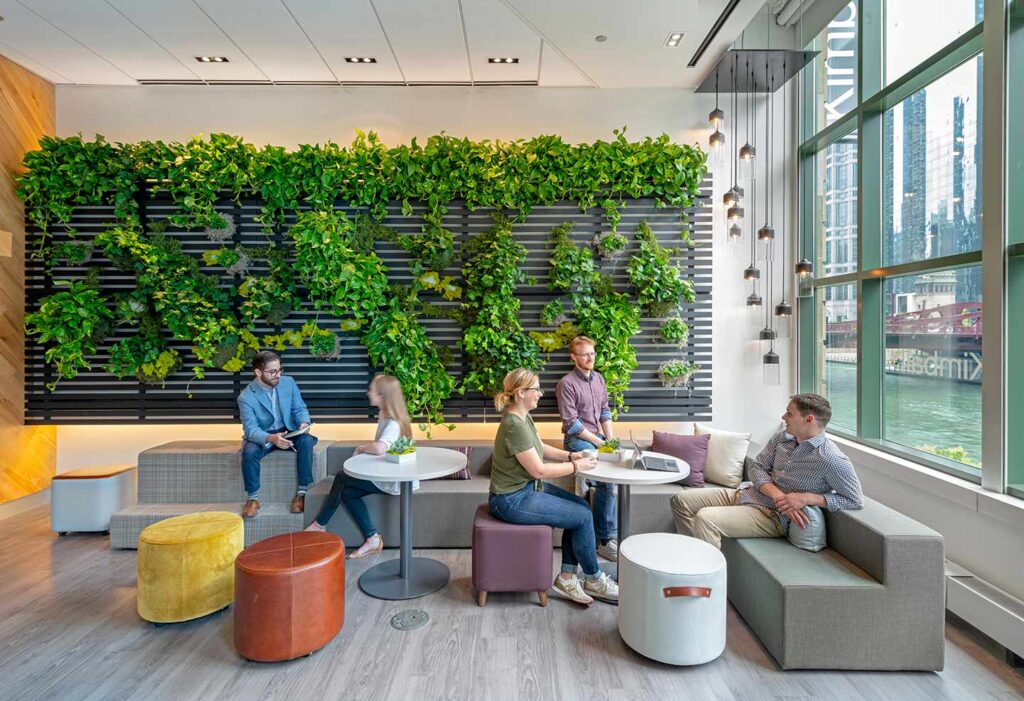
Before hybrid work became the norm, some of the most valuable workplace moments happened entirely by accident. A chance encounter at the printer led to cross-departmental collaboration. A casual conversation in the breakroom sparked the solution to a nagging problem. These unplanned interactions weren’t just pleasant social moments; they were the connective tissue that held organizational culture together and drove unexpected innovation.
When employees only come to the office two or three days a week, these serendipitous moments become increasingly rare. The office visit becomes transactional: arrive, attend scheduled meetings, leave. The informal knowledge exchange and relationship-building that once happened naturally now requires intentional design.
Beyond the Conference Room: Rethinking Natural Interaction Zones

Most organizations have invested heavily in formal collaboration spaces—conference rooms with video equipment, huddle rooms with whiteboards, and designated brainstorming areas. These are valuable, but they’re only part of the equation. The real opportunity lies in re-imagining the informal spaces where people naturally congregate. Consider the following:
Strategic Break Room Placement
Rather than tucking breakrooms into leftover corners, position them as central hubs that employees must pass through during their daily routines. Consider creating multiple smaller break areas on different floors or in different zones, each with a distinct character. This increases the likelihood of diverse encounters while preventing any single space from becoming overcrowded or dominated by one department.
The Coffee Station as Collaboration Catalyst
Instead of a single coffee machine pushed against a wall, create an inviting coffee bar with counter seating and standing tables nearby. Add comfortable seating options at varying distances from the coffee station— some people want a quick hit of caffeine, while others are open to lingering. The key is providing choice while making it easy for natural conversations to unfold.
Circulation Routes That Encourage Connection
Analyze traffic patterns in your office. Are there ways to route people past communal areas rather than through isolated corridors? Can you position popular amenities—printers, supply closets, or water stations—strategically to increase the chance of cross-functional encounters? Sometimes simply removing a door or widening a hallway can transform a pass-through space into a pause-and-chat zone.
Practical Tips for Planning Interactive Office Spaces
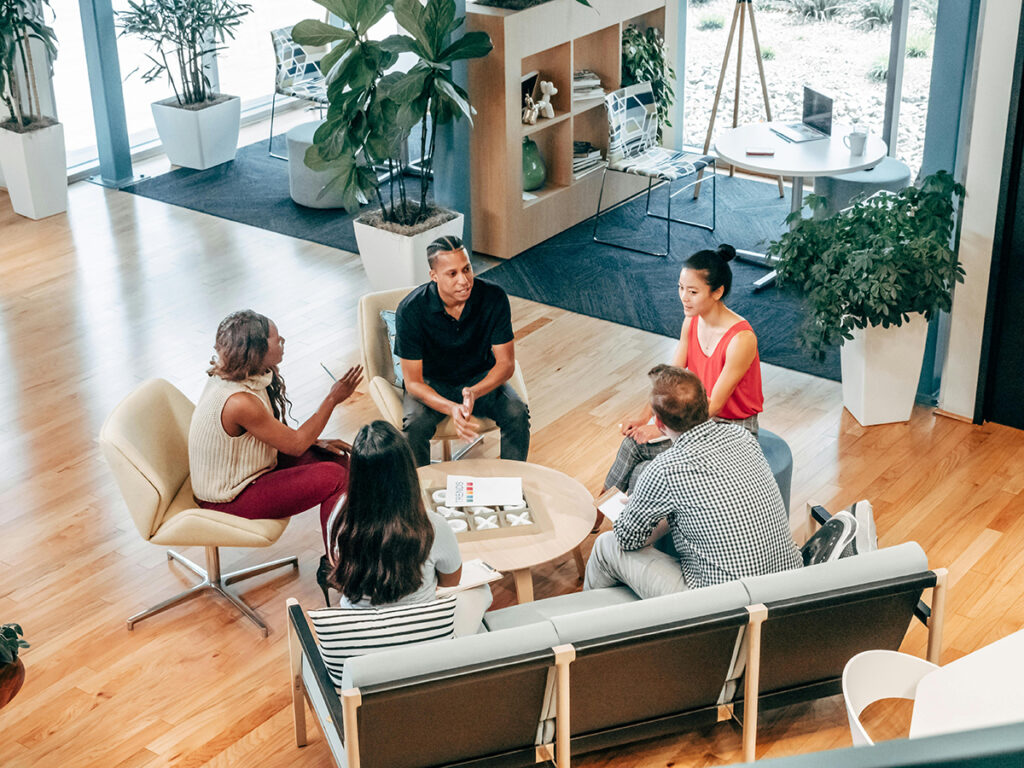
While there are many ways you can configure your office space to maximize employee engagement and interaction, the following are some surefire setup ideas that can be configured for any workplace.
- Create “dwell time” opportunities. Add comfortable seating, good lighting, and visual interest near natural gathering spots. A few chairs near the elevator bay or a window-side counter with stools can convert waiting time into connection time.
- Design for flexible occupancy. Install modular furniture that can accommodate one person working quietly, two colleagues having a spontaneous discussion, or a small group gathering organically. Avoid over-designating spaces for specific uses.
- Consider sightlines and visibility. Open sightlines help people spot colleagues across the office, prompting them to walk over and say hello. Balance this with acoustic privacy, so conversations don’t become disruptive.
- Embrace hospitality design principles. Make informal spaces genuinely inviting with residential-style furniture, plants, natural materials, and varied lighting. If a space feels institutional, people will treat their visit as transactional.
- Program your spaces thoughtfully. Consider offering morning snacks in one area and afternoon refreshments in another to distribute foot traffic throughout the day. Small gestures like fresh fruit or a rotating selection of teas create reasons to visit beyond pure necessity.
- Be flexible, monitor, and adapt. Pay attention to which spaces generate interaction and which ones sit empty. Be prepared to adjust furniture arrangements, amenities, and even wall configurations based on observed behavior.
Create Comfort and Connection with Legacy

The office of the hybrid era isn’t about desks and conference rooms—it’s about creating a destination worth the commute. By thoughtfully designing spaces where natural interactions can flourish, organizations can recapture the collaborative magic that makes in-person work irreplaceable.
The space planning and design team at Legacy has decades of experience revitalizing workplaces in the New York area and beyond. Our clients span the healthcare, education, hospitality, non-profit, government, and corporate industries, and we thrive in working with you to optimize your square footage in ways that benefit your business and your people. We’ll help you build your legacy, one connection point at a time.